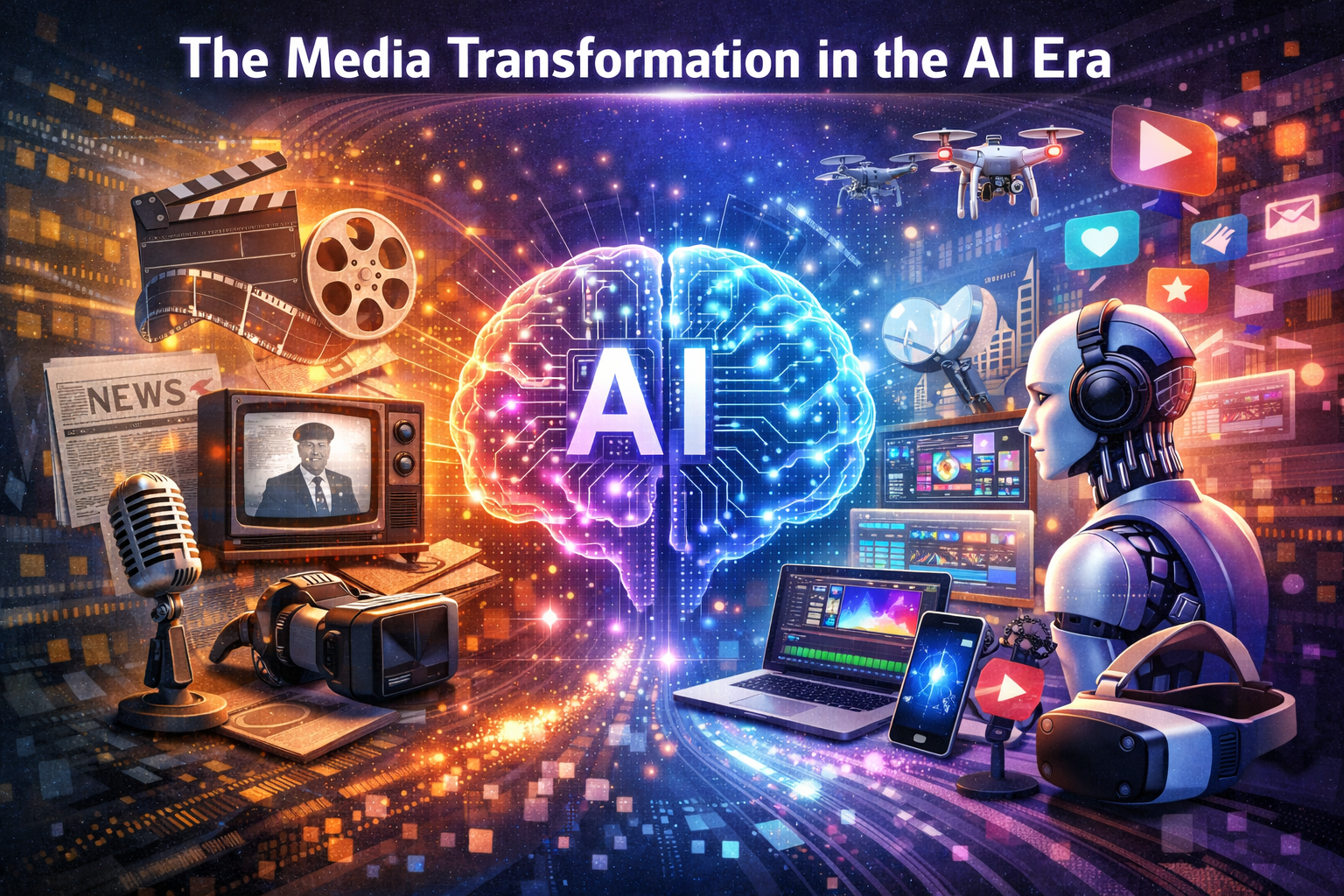
The media landscape has continued to evolve with the digital shift and the emergence of Artificial Intelligence, calling for new creative ways to captivate and retain consumers.
The industry is experiencing major shifts, with thousands being laid off due to the dwindling profits, with companies unable to retain their workers.
While this shift is taking place, a lot of questions continue to be asked, by those in the industry, those pursuing journalism courses, and others looking out for those in the industry.
The reality is staring at us that things have changed. It’s no longer business as usual, and the sooner people accept, then moving on and looking at the future with hope will help journalism sail through the tough times.
In the last seven months, female journalists have benefitted from a training on AI and journalism conducted by the International Association of Women in Radio and Television (IAWRT-Kenya) with other partners.
As I sat through the sessions, one thing was clear that we must embrace AI even as media companies grapple with the extent to which they can use AI.
The most important thing is for journalists to purposely learn, unlearn and relearn, to navigate through the industry.
Many media houses globally are now re-looking at how they can tell their stories, how they can reach various audiences, and AI is helping them define the direction they need to take. Media houses are now leveraging AI for audience engagement and analytics. This helps them to understand, where the consumers of their content are, what time they engage with the content, how long they engage with that content among other analytics.
However, media houses cannot throw caution to the wind. They need to put safeguards that will protect their credibility and trust.
As much as the how of telling that story has changed, trust will help sell content and therefore the need to have the safeguards in place, especially at a time when AI is being used to propagate misinformation and disinformation.
A session on AI Ethics, policy, and responsible use in Journalism in Kenya emphasized why the media must remain alert following the emerging risks such as deep fakes, algorithmic bias, and disrupted information ecosystems caused by instances of AI hallucinations and so much more.
Facilitating the session, Dr.Grace GIthaiga underscored the need for media houses to remain accountable for what they put out to the public, even with AI-powered tools in place to verify information and that ethical standards must be adhered to while producing content.