By Faith Oyoo
Seven months at IAWRT Kenya taught us how AI is reshaping journalism today.
AI is no longer a distant concept for journalists, it’s a present reality transforming how we work.
From automated transcription and data analysis to interactive storytelling, AI tools can speed up research, detect misinformation, and reveal insights hidden in complex datasets.
They promise efficiency, but their use requires careful judgment and ethical consideration.
One of the most important lessons we’ve learned is ethical responsibility. Algorithms can carry biases, and AI generated content can mislead if left unchecked.
“A journalist’s responsibility is to establish what the content truly shows by asking who created it , when, where and why,” digital trainer Nelly Moraa cautioned trainees.
She added that verification in today’s age is a combination of digital tools, strong editorial judgement and multiple credible sources.
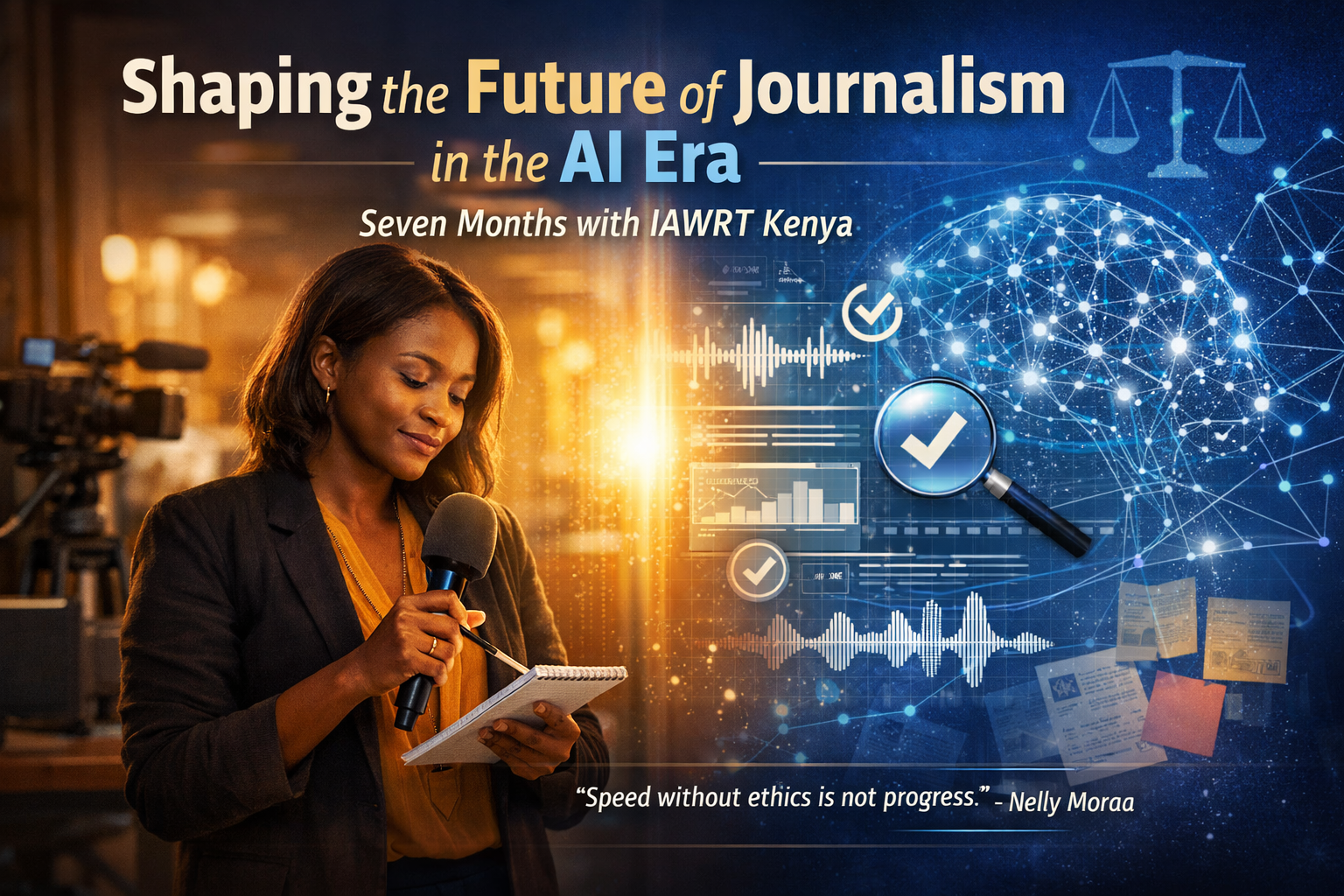
Every AI output must be treated like a source verified, contextualized, and balanced with human oversight. Speed without ethics is not progress.
Beyond tools and ethics, the program encouraged creative storytelling. AI can help journalists visualize data, explore immersive formats, and engage audiences in new ways.
But creativity remains inherently human, emotion, nuance, and cultural context cannot be fully automated. AI is a collaborator, not a replacement.
Seven months of training have also reshaped our mindset. The conversation has shifted from “if AI will impact journalism” to “how we can guide AI to serve truth and public interest.”
AI is powerful, but the human touch, integrity, judgment, and curiosity remains indispensable.
In the end, this journey with IAWRT Kenya highlighted that AI is about people, values, and decisions.
It’s not just about adopting new tools, it’s about shaping a responsible, ethical, and innovative media landscape.