
By Selphar Musungu
When artificial intelligence first began making its way into Kenyan newsrooms, many female journalists watched with curiosity, eager to learn but unsure where to begin.
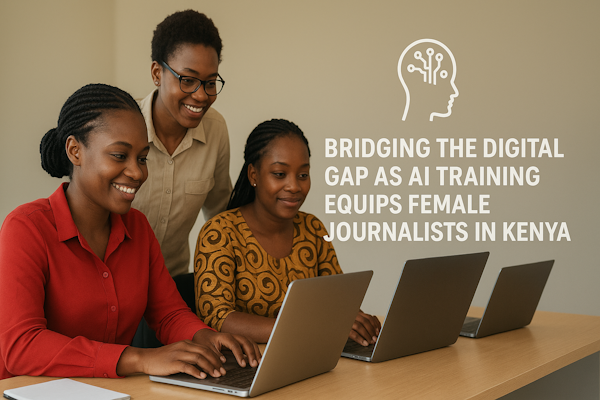
That uncertainty is now fading, thanks to a new initiative by the International Association of Women in Radio and Television (IAWRT–Kenya), supported by Google, APC, and the Kenya Correspondents Association. The programme has opened a powerful path for female journalists in the media industry to claim their space in a rapidly evolving digital landscape.
Launched in August, the project has rolled out training sessions month by month, each one designed to deepen participants’ understanding of the artificial intelligence tools reshaping modern journalism. From foundational AI concepts to advanced digital applications in storytelling, the sessions are practical, engaging, and intentionally tailored for women journalists.
“The media space is changing faster than ever. Journalists have to adapt to growing technology. Female journalists especially need digital confidence and the right tools to compete in this evolving industry,” said Josephine, one of the trainers, during a recent session.
The first workshop introduced participants to Gemini, Google’s AI tool, demonstrating how it can support in-depth research and help generate strong, well-informed story ideas. From there, the training became increasingly hands-on, exposing journalists to a range of AI tools now influencing the craft of reporting.
Google’s Gemini proved not only useful for research but also for quick fact-checking and generating responsible visual concepts. NotebookLM helped participants organise interviews, summarise long documents, come up with videos and audios from written stories and streamline story outlines with greater efficiency.
Investigative journalists found Google Pinpoint especially powerful, using it to analyse thousands of documents, filter information and spot patterns that would take days, or weeks, to uncover manually. Creative tools such as Nonabanana expanded storytelling possibilities, allowing reporters to experiment with new formats and visuals.
Beyond technical skills, the sessions placed strong emphasis on ethics and transparency. Journalists were trained to acknowledge any information generated using AI and to disclose when AI tools contribute to their work.
“For us not to lose trust with our audience, who also understand technology, it’s essential to acknowledge when we use AI tools. Whether in print, broadcast, or digital stories, transparency is crucial,” said another facilitator.
For many female journalists in the cohort, the experience has been transformative. The training has not only expanded their digital capacity but also strengthened their confidence to navigate online spaces, pitch innovative story ideas, and produce journalism that meets global standards.
“These sessions are incredible. I can’t wait to apply the knowledge I’ve gained to my stories,” said Irene, one of the participants.
As the programme continues, IAWRT–Kenya and its partners hope to build a strong network of digitally savvy women journalists equipped to lead innovation in Kenyan media. For the participants, one message stands out clearly: the future of journalism is here—and they are ready for it.