
By Nelly Moraa
Entebe ,Uganda — African law enforcement agencies, legal bodies, and media organizations have pledged new commitments to protect women journalists amid rising cases of harassment, intimidation, and violence across the continent.
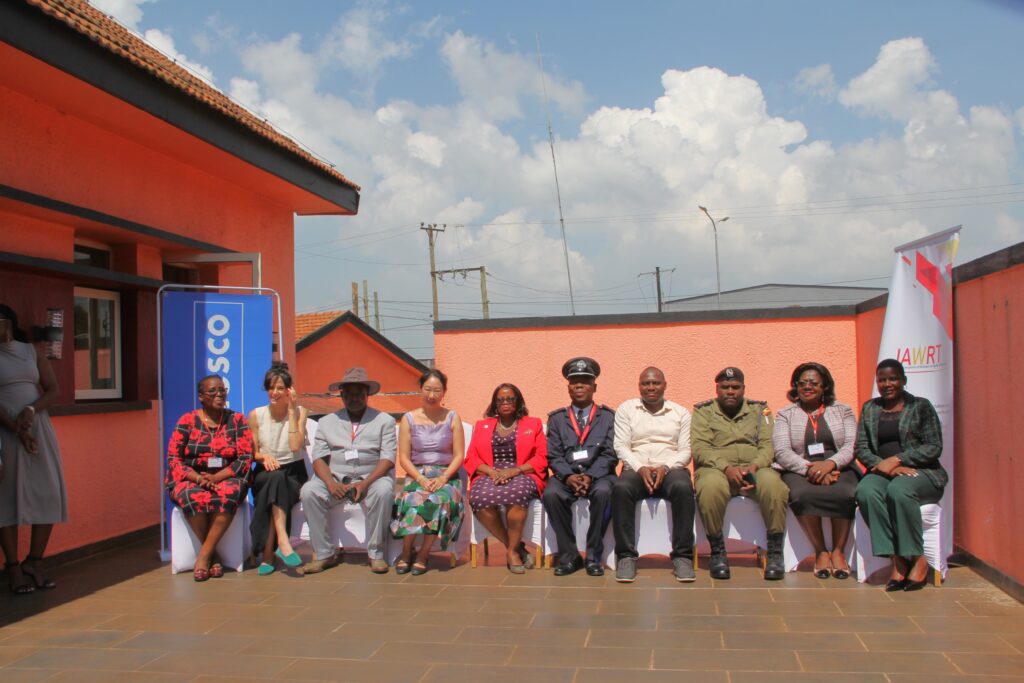
In picture, law enforcement officers -from the left representing Uganda, Nigeria, Cameroon and Kenya during our training on Monitoring and Reporting Violation Cases Against Female Journalists Across Africa.
The renewed momentum follows the expansion of the IAWRT Mapping Tool, a digital platform designed to document and trigger action on violations targeting women in the media.
This week, during the opening of a training workshop on Monitoring and Reporting on the Safety of Journalists in Africa, senior police officials, legal experts, and media stakeholders affirmed the tool’s significance, especially as African countries prepare for high-risk electoral cycles.
Speaking at the opening ceremony, Commissioner Polycarp Ngufor Forkum, Head of the Human Rights Unit of the Cameroon Police Force, underscored that law enforcement has a legal and moral duty to guarantee journalists’ safety. He praised the IAWRT-UNESCO collaboration as “a timely and visionary step,” noting that the partnership’s second phase expressly focuses on strengthening institutional response.
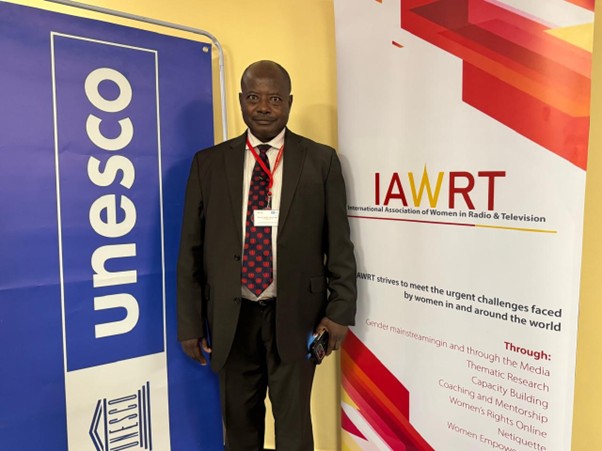
Photo: Commissioner Ngufor posing during our training in Entebe, Uganda
“Journalists are watchdogs of democracy, and it is we, law enforcement, who must guarantee their safety,” Commissioner Ngufor said. The observatory provides vital data, but data alone is not enough. What completes the cycle of justice is professional investigation and enforcement.”
A growing wave of gender-based attacks on women journalists across Africa has pushed regional institutions to escalate their response, with IAWRT’s innovative Mapping Tool emerging as a critical platform for documenting, verifying, and triggering action against violations.
The workshop highlighted that attacks spike sharply during elections, when political tensions, misinformation, and public demonstrations create volatile reporting environments.
Security representatives from Kenya, Uganda, Zambia, Nigeria, and Cameroon echoed similar commitments, acknowledging that improved collaboration with media workers is essential for credible investigations, stronger community trust, and safer reporting environments.
Assistant Commandant-General Olusola Odumosu of the Nigeria Security and Civil Defence Corps (NSCDC), presented a paper titled “From Report to Response: How Cases of Attacks Against Female Journalists Are Handled.”
Odumosu affirmed that the NSCDC has prioritised journalist safety as part of its mandate, but stressed the need for deeper reforms.
“We cannot protect what we do not understand,” he said. “Our responses must recognise trauma, centre gender sensitivity, and be grounded in empathy as well as professionalism.”
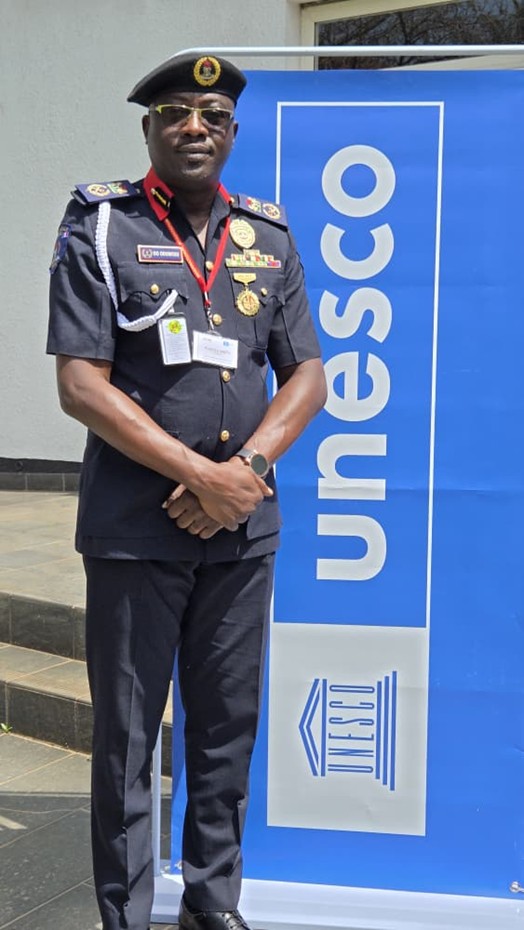
Photo: Mr. Odumosu Olusola representing the law enforcement collaboration from West Africa
Odumosu urged institutions to build a culture where impunity is rejected and every attack triggers action.
The Pan African Lawyers Union (PALU), one of the key partners in the Mapping Tool initiative, will provide legal support to cases submitted through the platform. PALU’s role includes guiding journalists under attack through legal processes, supporting litigation, ensuring institutions respond to verified cases and strengthening the implementation of continental human rights frameworks.
This legal infrastructure is critical in closing the enforcement gaps that have allowed perpetrators of violence against journalists, especially women to act without consequence.
The high-level training workshop on Monitoring and Reporting on the Safety of Journalists in Africa, was convened by the International Association of Women in Radio and Television (IAWRT) and supported by UNESCO.
UNESCO’s Advisor for Communication and Information in Africa, Misako Ito, who officiated at the launch of the mapping tool reminded participants that protecting women journalists is a democratic requirement.
“When women journalists are silenced through fear or violence, societies lose essential voices and the public loses access to truth. We must ensure that every report leads to real protection and real justice.”
These sentiments were shared by Commissioner Polycarp Ngufor Forkum, while hailing the cooperation between IAWRT, UNESCO, and security institutions.
“Freedom of expression is not a favor; it is a right. The safety of journalists is not optional, it is our duty as security officers and guardians of the rule of law.”
Ngufor emphasised that freedom of expression thrives only when police uphold the rule of law and respond promptly to violations.
He welcomed the tool’s gender-sensitive focus, noting that women journalists face a “systemic pattern of intimidation designed to silence their voices.”
Participants at the regional workshop were unified in calls to ensure that data, legal frameworks, and police action must collaborate towards ensuring the safety of women journalists in Africa.
IAWRT’s mapping and reporting observatory
IAWRT’s Mapping Tool, powered by Ushahidi technology, has already captured more than 120 verified cases of press freedom violations against women journalists across 16 African countries. It promotes a platform for a coordinated response to attacks against female journalists.
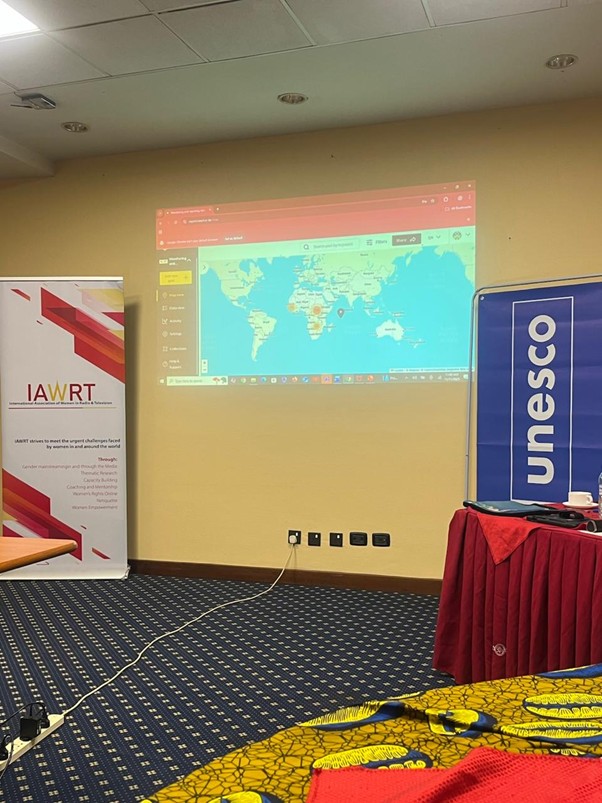
Image capture of IAWRT’s mapping and reporting observatory
It enables journalists to log incidents in real time, pinpoint exact locations, upload evidence, trigger independent verification and activate institutional follow up.
The tool’s launch comes against a backdrop of troubling trends. Data collected by IAWRT, UNESCO-supported researchers, and press freedom organizations shows:
73% of women journalists in Africa have faced online harassment.
25% report physical threats; 18% have endured sexual violence.
20% of online threats eventually escalate into offline attacks.
Between 2019–2024, at least 258 violations against women journalists, including assaults, abductions, and arrests were documented by regional monitoring groups.
Election periods remain the deadliest, with national security agencies responsible for the majority of violations reported in several countries.
PALU’s involvement ensures that the Mapping Tool is not merely a reporting mechanism but a pathway to justice.
IAWRT representatives stressed that legal intervention is essential because most women journalists do not report incidents due to fear, stigma, or the belief that “nothing will be done.”