
16 Days of Activism 2026
UNiTE to End Violence Against Women and Girls: Ensure justice, protect survivors, end impunity
Home › 16 Days of Activism › 2026
Ensure justice, protect survivors, end impunity
Every year, from 25 November (International Day for the Elimination of Violence against Women) to 10 December (Human Rights Day), the world marks the 16 Days of Activism against Gender-Based Violence. The 2026 theme is “UNiTE to End Violence Against Women and Girls: Ensure justice, protect survivors, end impunity.”
IAWRT Kenya is taking part, focusing on the safety of women journalists across Africa. Online and offline violence against women in media too often goes unreported and unpunished. Over the next 16 days, we will share what our data shows and ask everyone to help document violence against women journalists across Africa using our open reporting tool at report.iawrt.or.ke.
The Problem
Women in media are targeted for doing their jobs, and most of it never gets recorded.
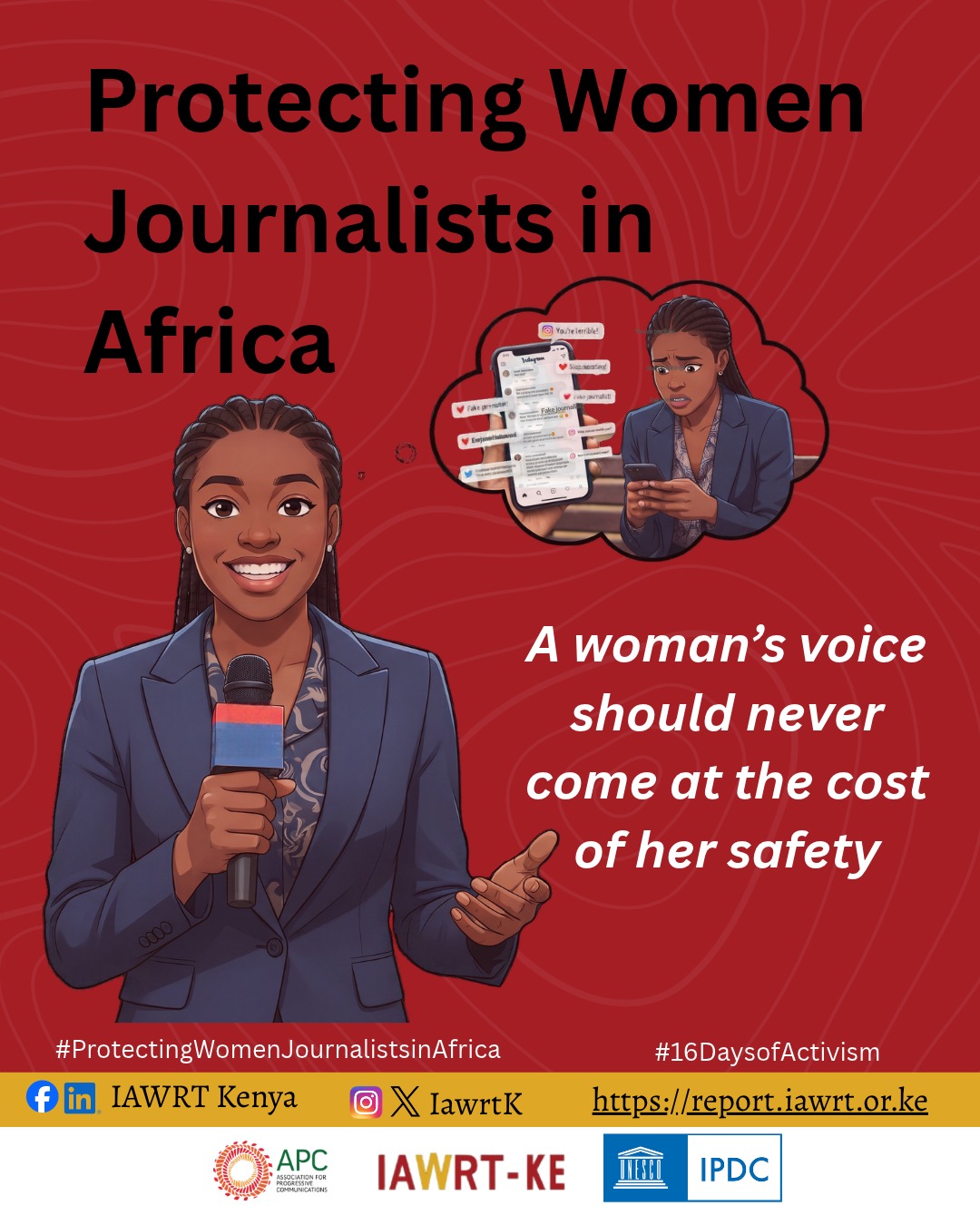
A Woman’s Voice Should Never Cost Her Safety
A woman’s voice should never come at the cost of her safety. Too many women journalists face abuse simply for doing their job and being in a public-facing role.
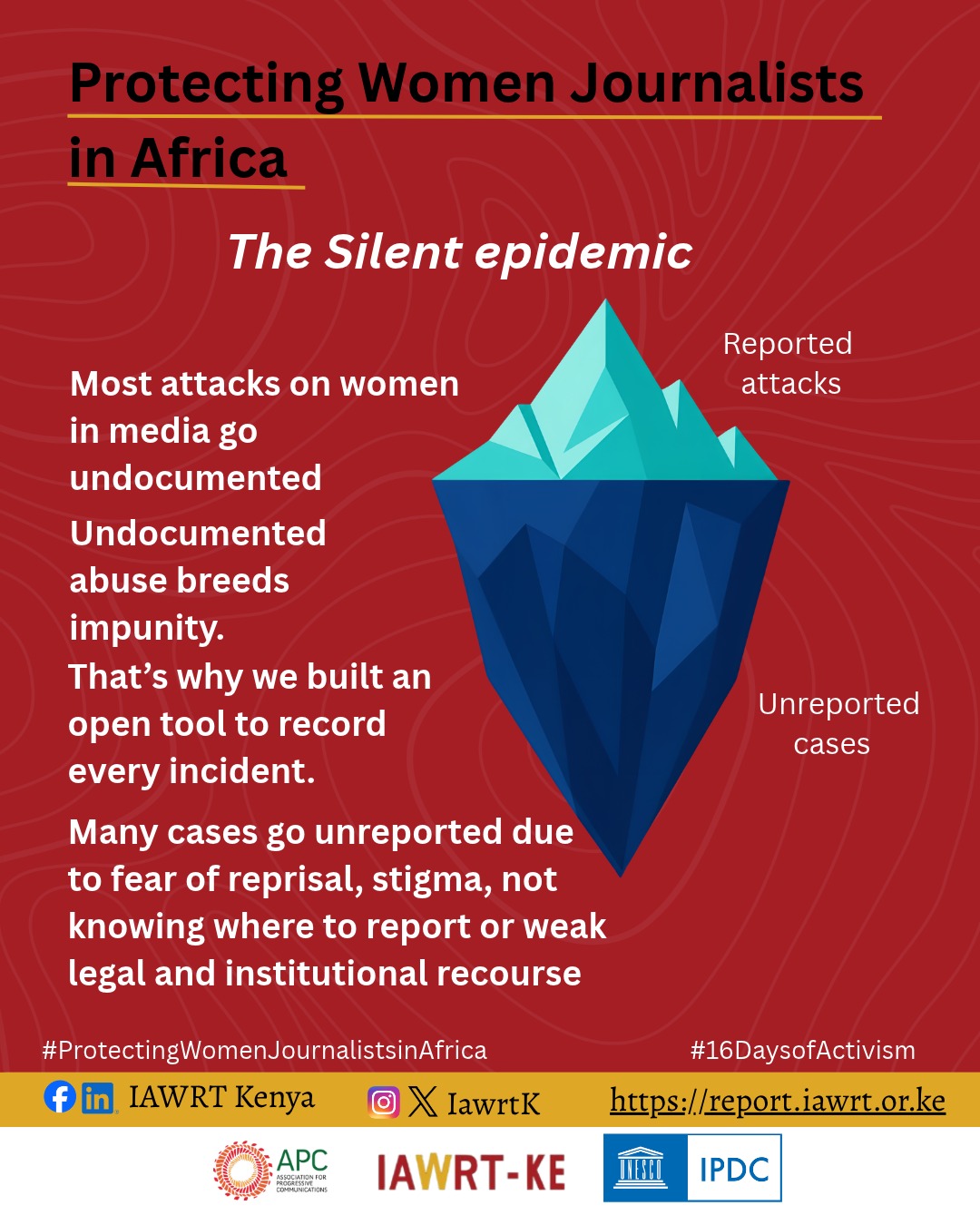
The Silent Epidemic
Most attacks on women in media go undocumented, and undocumented abuse breeds impunity. This happens because of fear of reprisal, stigma, not knowing where to report, or weak legal and institutional recourse.
To bridge this gap, IAWRT built an open tool to record every incident and follow up on access to justice for those affected.
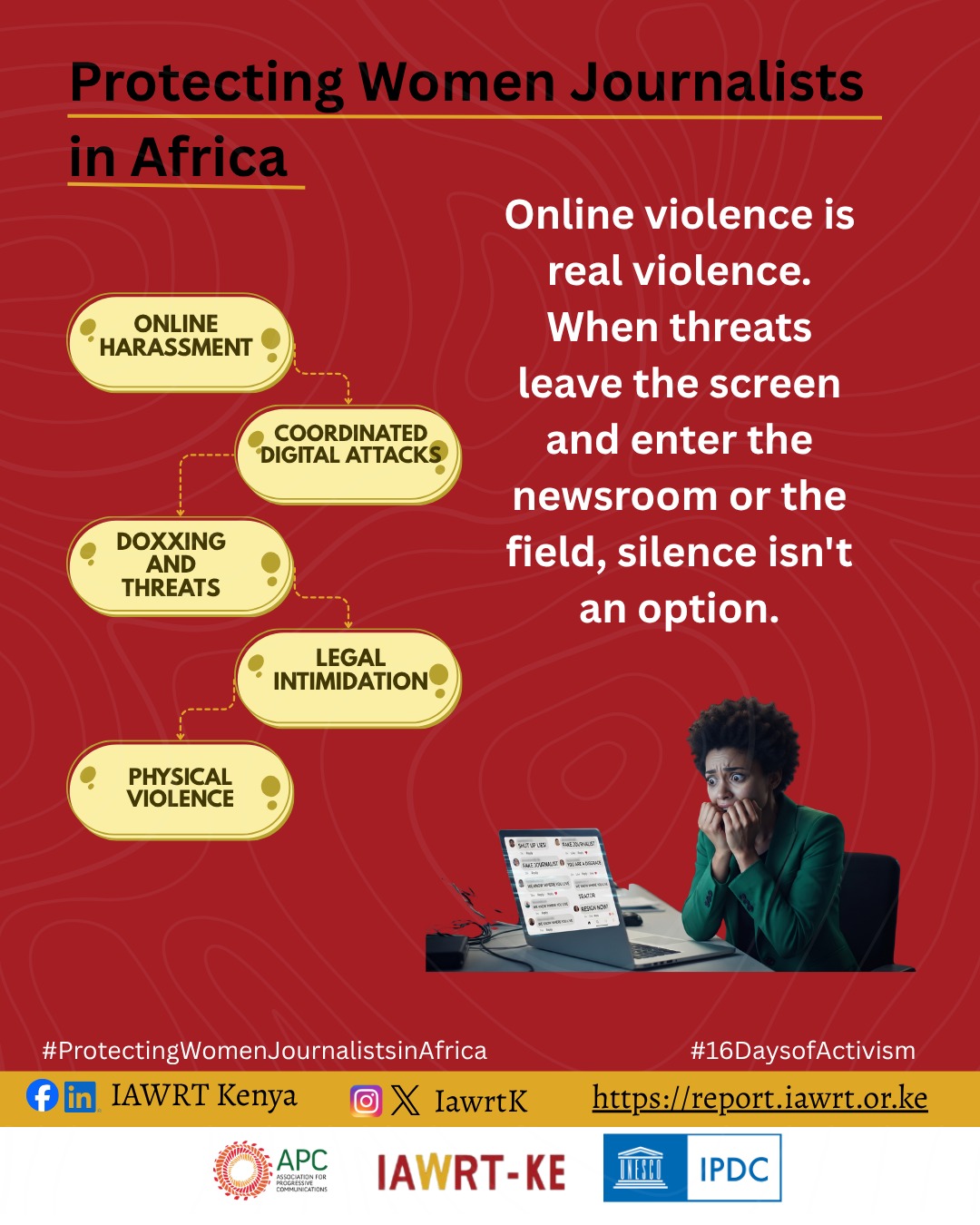
Online Violence is Real Violence
Abuse often escalates step by step and transcends from online to offline: It could manifest as online harassment, coordinated digital attacks, doxxing, and threats and extend to physical violence
When threats leave the screen and enter the newsroom, home or the field, silence isn’t an option.
What the Data Shows
Data drives policy. Every report helps IAWRT build coordinated responses for the safety of women journalists across the continent.
Types of Violations Reported
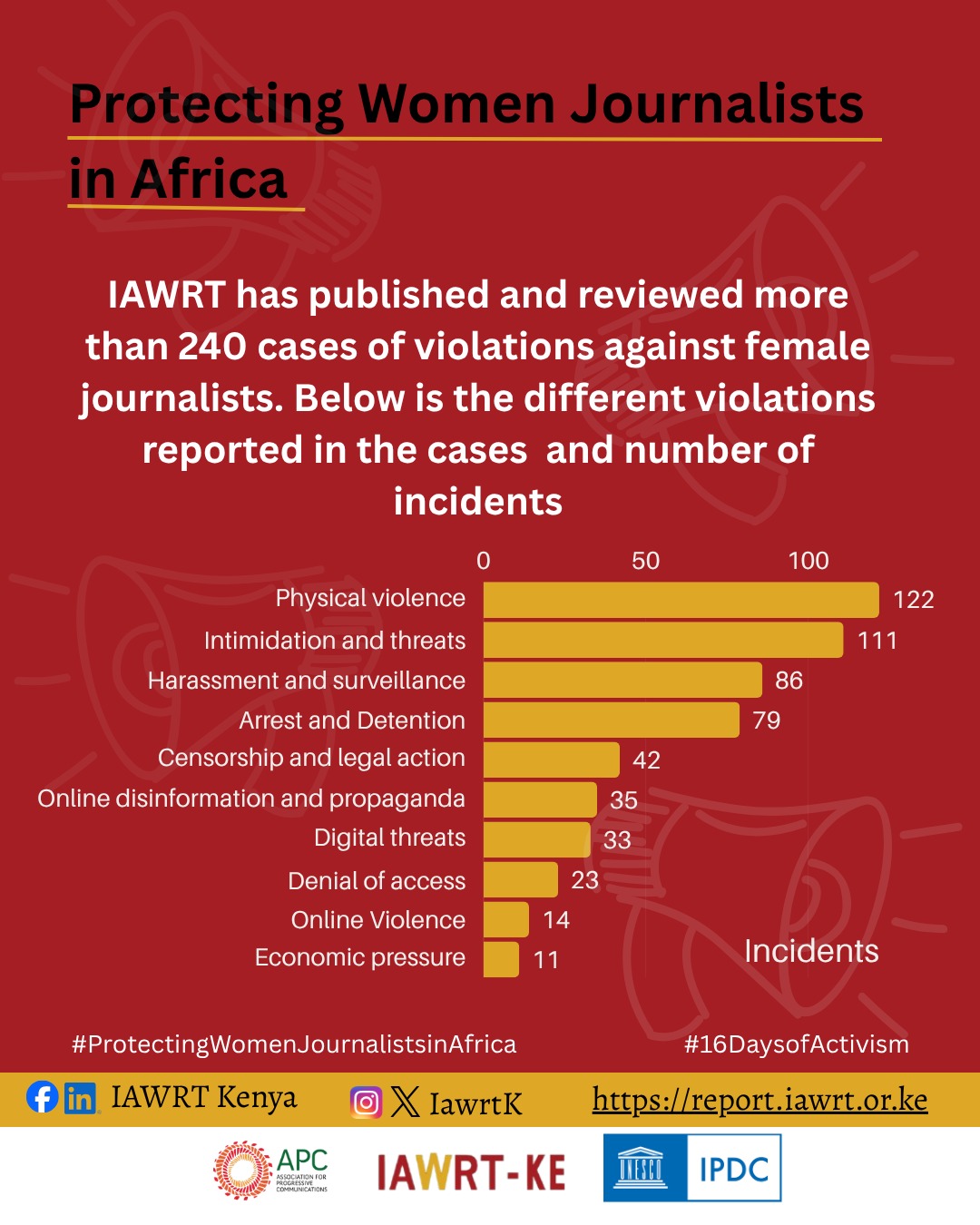
By November 2026, IAWRT has published and reviewed more than 240 cases of violations against women journalists. The most common types of violence reported are:
- Physical violence: 122
- Intimidation and threats: 111
- Harassment and surveillance: 86
- Arrest and detention: 79
- Censorship and legal action: 42
- Online disinformation and propaganda: 35
- Digital threats: 33
- Denial of access: 23
- Online violence: 14
- Economic pressure: 11
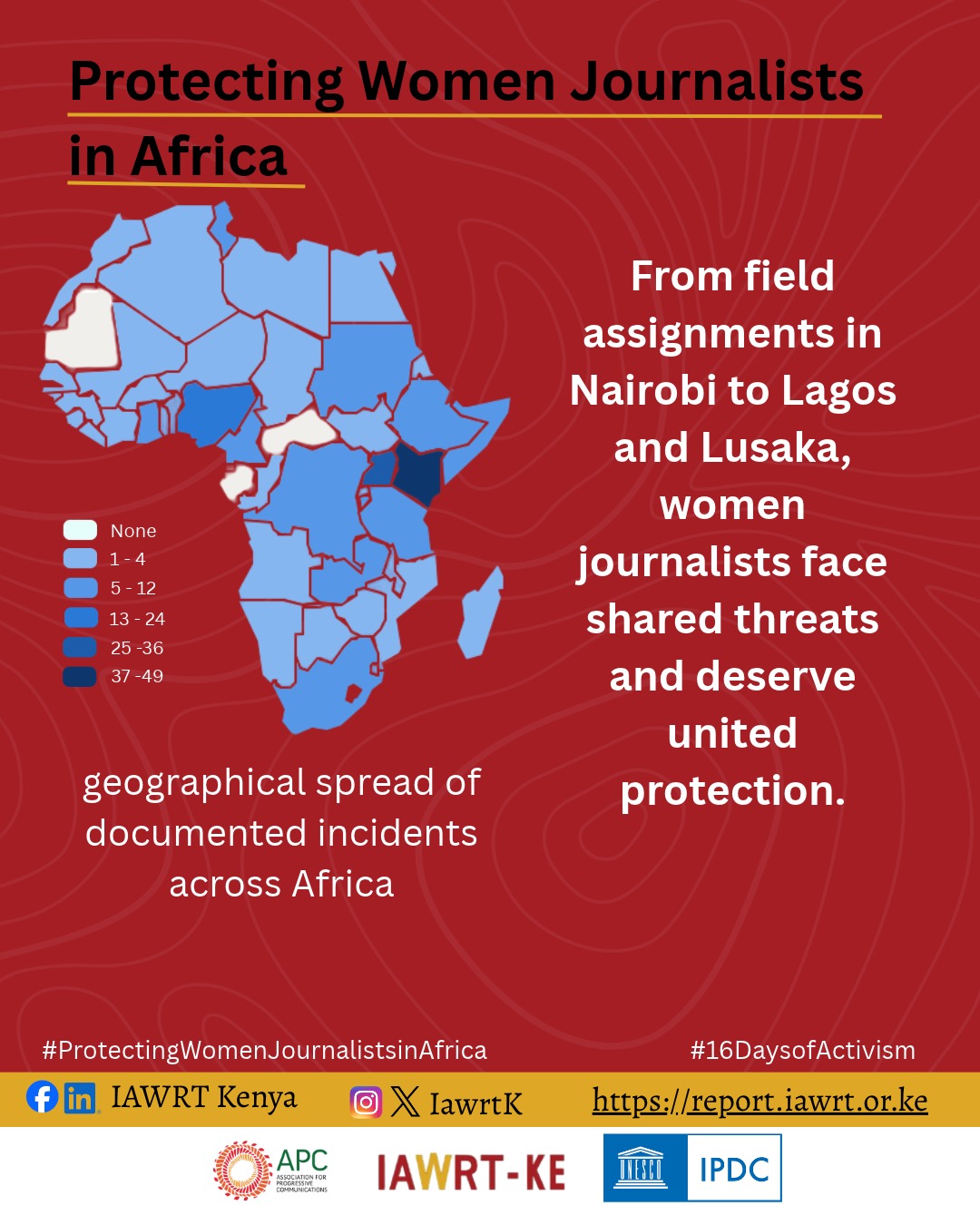
Incidents Across Africa
The observatory shows where documented incidents have taken place across Africa, with Kenya among the countries with the most reports.
From field assignments in Nairobi to Lagos and Lusaka, women journalists face shared threats and deserve united protection.
Impact in Numbers
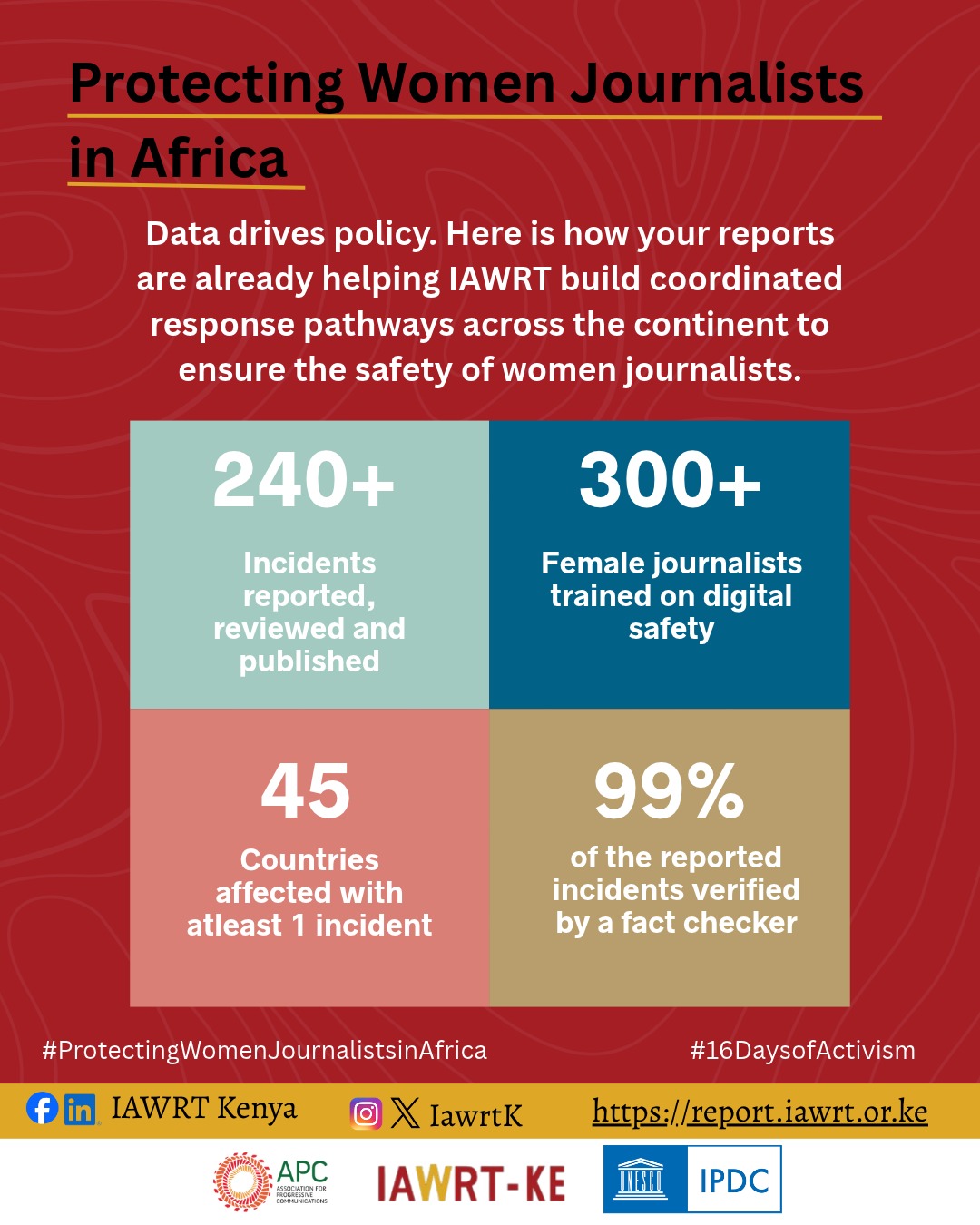
As some cases are being actively pursued judicially with the support of our legal partners from the Pan African Lawyers Union (PALU), these are our aligned efforts and reported incidents, by number, as of November 2026:
- 240+ incidents reported, reviewed and published
- 300+ women journalists trained on digital safety
- 45 countries with at least one incident
- 99% of reported incidents verified by a fact-checker
Take action
The reporting tool is open to the public and built for accountability. Anyone can see what is happening and map an incident.
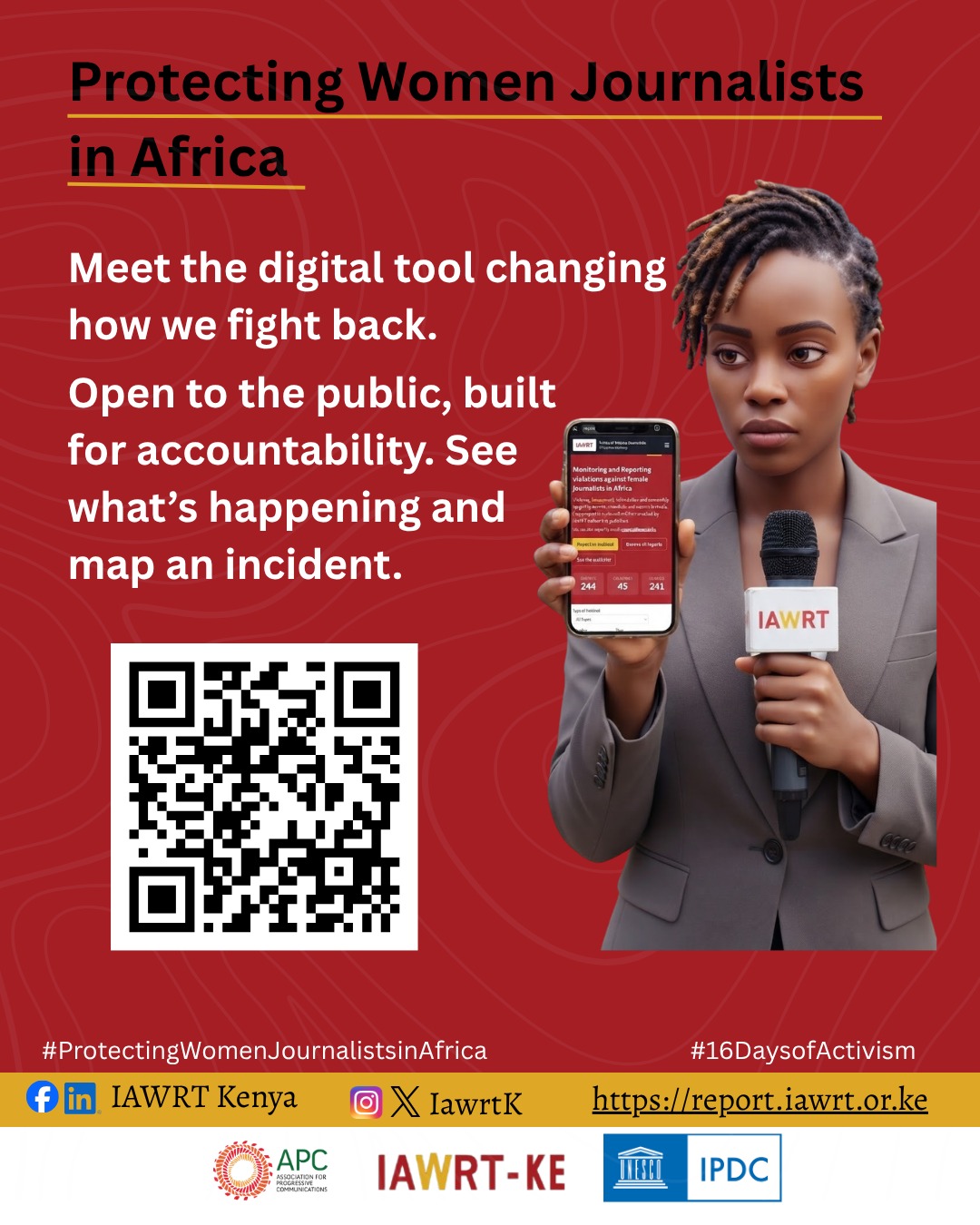
Meet the Reporting Tool
Visit report.iawrt.or.ke or scan the QR code on the flyer to see reported incidents and map a case today.
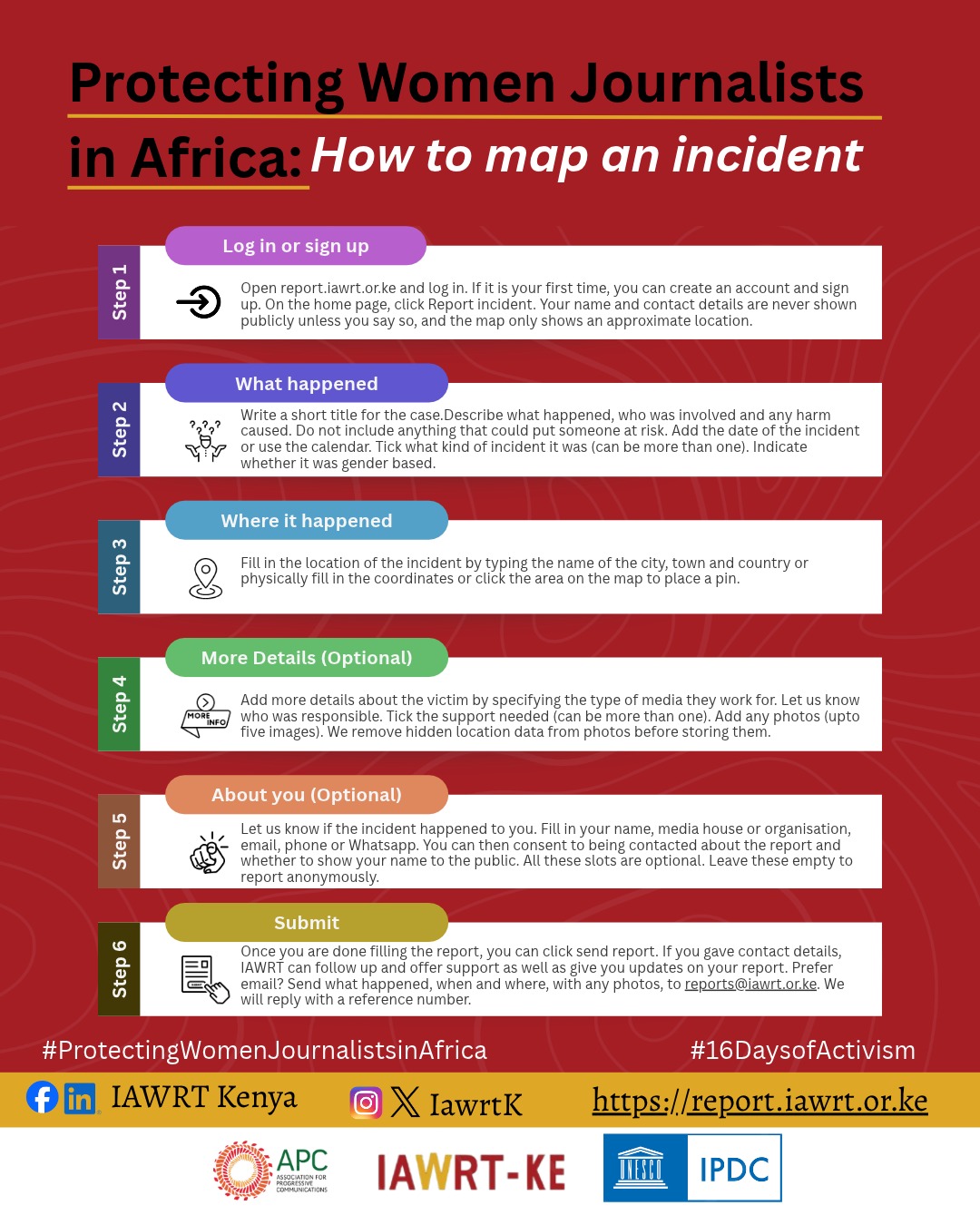
How to Map an Incident
- Log in or sign up at report.iawrt.or.ke and click Report incident. Your name and contact details are never shown publicly unless you choose to, and the map shows only an approximate location.
- What happened: Give a short title, describe what happened, who was involved and the harm caused. Don’t include anything that could put someone at risk. Add the date, tick the incident types, and indicate whether it was gender-based.
- Where it happened: Enter the city or town and country, add coordinates, or click on the map.
- More details (optional): The victim’s media type, who was responsible, support needed and up to five photos. Hidden location data is removed from photos.
- About you (optional): Whether it happened to you; your name; media house; email and phone or WhatsApp; and whether we may contact you or show your name. Leave it empty to report anonymously.
- Submit: Send the report so IAWRT and partners can follow up and offer needed support.
Prefer email? Send what happened, when, and where, along with any photos, to reports@iawrt.or.ke, and you’ll receive a reference number.
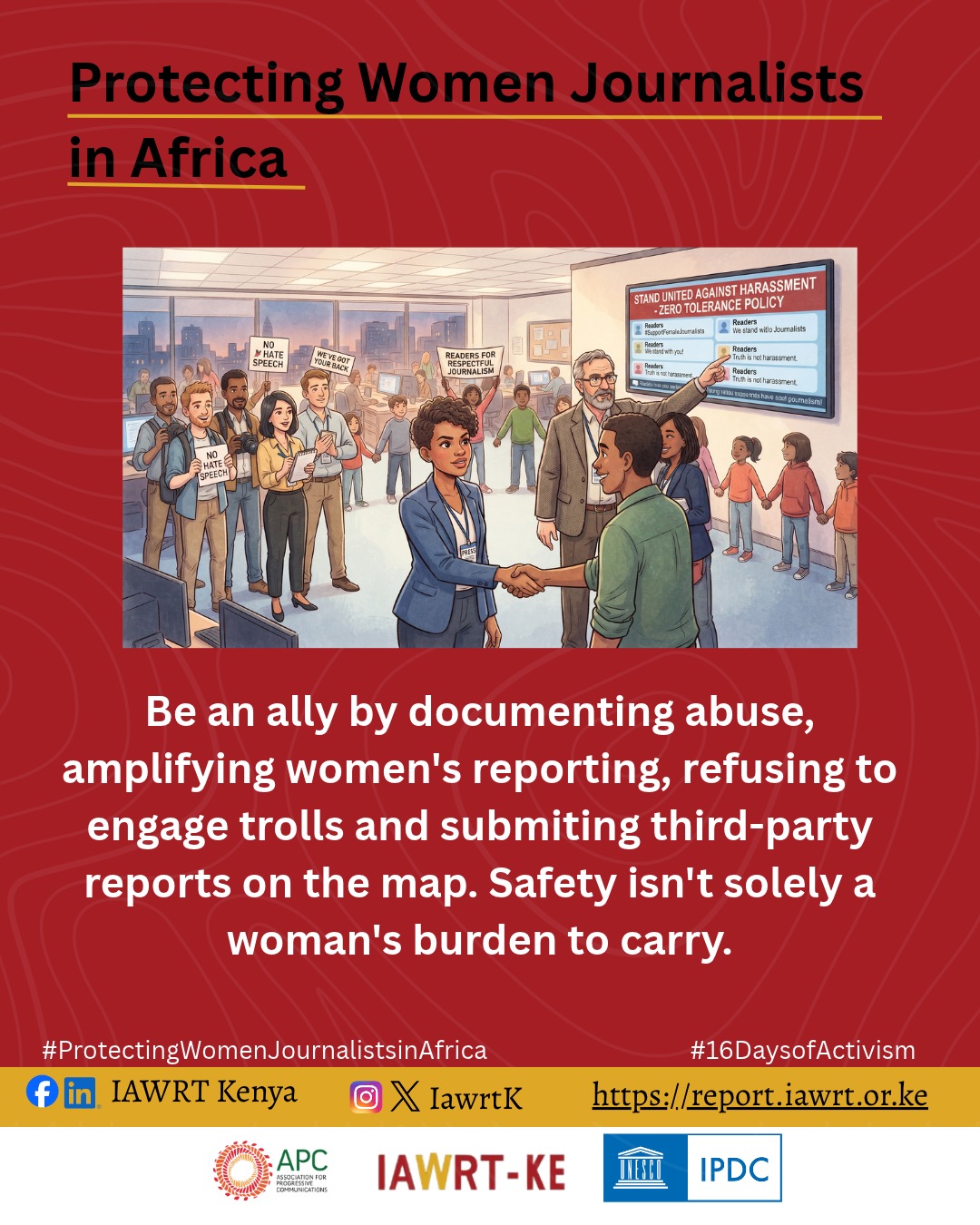
Be an Ally
Safety isn’t solely a woman’s burden. You can help by:
- Documenting abuse
- Amplifying women’s reporting
- Refusing to engage trolls
- Submitting third-party reports on the map
Share the Campaign
Use #16DaysofActivism and #ProtectWomenJournalistsinAfrica, and tag the International Association of Women in Radio and Television Kenya on Facebook and LinkedIn, @IAWRTKE on Instagram and @IawrtK on X.
This campaign is supported by UNESCO’s International Programme for the Development of Communication (IPDC) and the Association for Progressive Communications (APC), and in partnership with the Pan African Lawyers Union (PALU) and country-specific lawyers and judicial officers.
Seen or experienced an attack?
Report it. Every documented incident helps end impunity. You can report anonymously.