
By Raylenne Kambua
Press freedom in Kenya and across East Africa is facing a dangerous and unprecedented decline. Once regarded as a regional beacon of media independence, Kenya is now grappling with a rapidly shrinking civic space, escalating violence against journalists, and systemic impunity that threatens the very foundations of democracy.
A recent statement by the Kenya Media Sector Working Group (KMSWG) paints a stark picture of this reality, warning that media freedom in the region is deteriorating, particularly as Kenya approaches the 2027 General Elections. The coalition notes that journalists are increasingly being targeted by state and non-state actors, including politicians and organized criminal gangs often referred to as goons, in what appears to be a coordinated effort to suppress truth and accountability.
The Rise of Violence and “Goonism” in Kenya
One of the most alarming trends highlighted is the rise of “goonism”. Organized gangs are deliberately deployed to attack journalists, disrupt reporting, and destroy equipment, obstructing the documentation of events, particularly in politically charged environments.
Journalists covering protests, political rallies, and public interest stories have found themselves at the receiving end of violence from both hired thugs and, at times, state security forces. These occurrences underscore the growing normalization of violence that has led to increased self-censorship, fear, and a breakdown in the rule of law.
This trend is not merely a threat to individual journalists but also an existential threat to democracy. When journalists are silenced, the public is denied access to information, accountability is weakened, and political actors operate without scrutiny.
Election Cycles as Flashpoints for Press Violations
Historically, election periods in Kenya have been among the most dangerous times for journalists, and the current trajectory suggests that the 2027 elections may follow this troubling pattern. According to KMSWG, election cycles intensify hostility toward the media, as political actors seek to control narratives and limit scrutiny.
Recent by-elections and protest coverage in Kenya have already demonstrated how volatile political environments expose journalists to heightened risks. Incidents such as the shooting of journalists while on duty and the harassment of reporters at political events underscore how easily the line between political contestation and targeted violence against the press is crossed.
Regional Trends
The crisis facing press freedom is not confined to Kenya. Across East Africa, similar patterns of repression are emerging. The KMSWG expresses solidarity with journalists in neighbouring countries, citing the military-backed siege and closure of media houses in Uganda and the enforcement of media restrictions and internet shutdowns during elections in Tanzania.
This regional dimension underscores the need for collective action. As noted in the statement, the assault on journalism is a “regional contagion” that demands a unified response from governments, media stakeholders, and civil society.
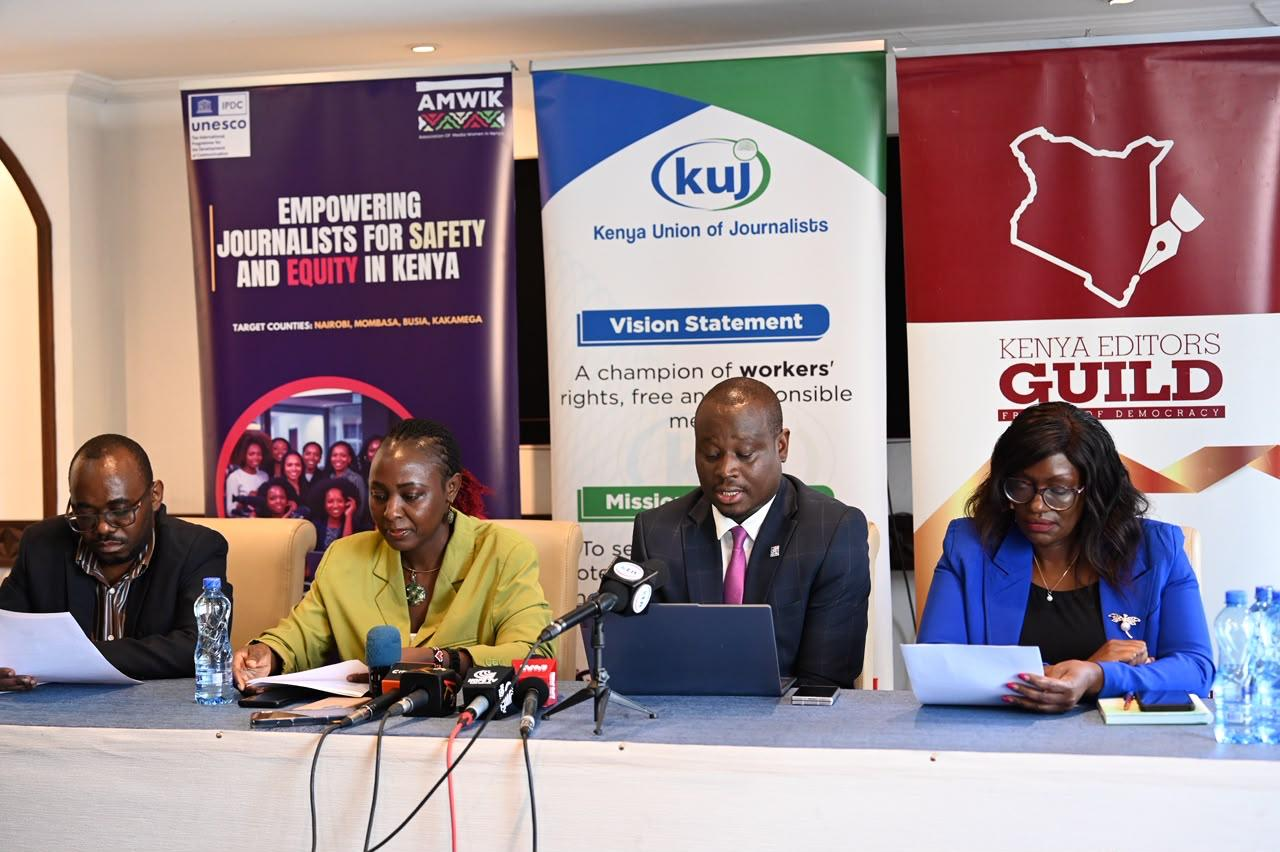
The Kenya Union of Journalists (KUJ) Secretary General, speaking at the KMSWG press briefing, strongly condemned the ongoing attacks and emphasized the urgent need for state protection of journalists. Equally important was the Secretary General’s expression of solidarity with journalists across East Africa, recognizing that the fight for press freedom transcends national borders.
Institutional Failures and Industry Gaps
Beyond state responsibility, the KMSWG statement also calls attention to shortcomings within the media industry itself. Journalists are often deployed to high-risk assignments, such as protests and crime scenes, without adequate protection, insurance, or psychosocial support.
This lack of institutional support exacerbates the vulnerabilities faced by journalists, effectively placing them in harm’s way without sufficient safeguards. Addressing press freedom, therefore, requires not only government accountability but also reforms within media institutions to prioritize the welfare and safety of their staff.
A Call for Accountability and Action
As part of the KMSWG coalition, IAWRT Kenya is committed to defending press freedom and safeguarding journalists, particularly women who face targeted and gendered attacks. We will actively pursue justice for cases reported on our platform and strengthen efforts toward justice and accountability. We urge government institutions, media houses, and the public to stand with journalists and protect the fundamental right to information.
To restore public trust in institutions and reaffirm the role of the media as a cornerstone of democracy, the KMSWG continues to call for accountability for attacks on journalists, stronger protection frameworks from the Ministry of Interior, and a zero-tolerance policy on violence against the press.
Share this story
Are you a woman working in media?
Join IAWRT Kenya for training, mentorship, fellowships and a supportive network of women media practitioners.
More stories
- All Posts
- Articles
- Mentorship
- Networking

Home › Blog › Articles Protecting Journalists in Kenya’s Digital Space: Why Media and Tech Policy Must Be Rights-Based 18 October 2026...
Home › Blog › Articles Reporting Violations Against Female Journalists: A Shared Responsibility 31 August 2026 4 min read Articles By IAWRT...
Home › Blog › Articles What a Year of Tracking and Mapping Online Gender-Based Violence Against Women in Media Revealed 24 August...