
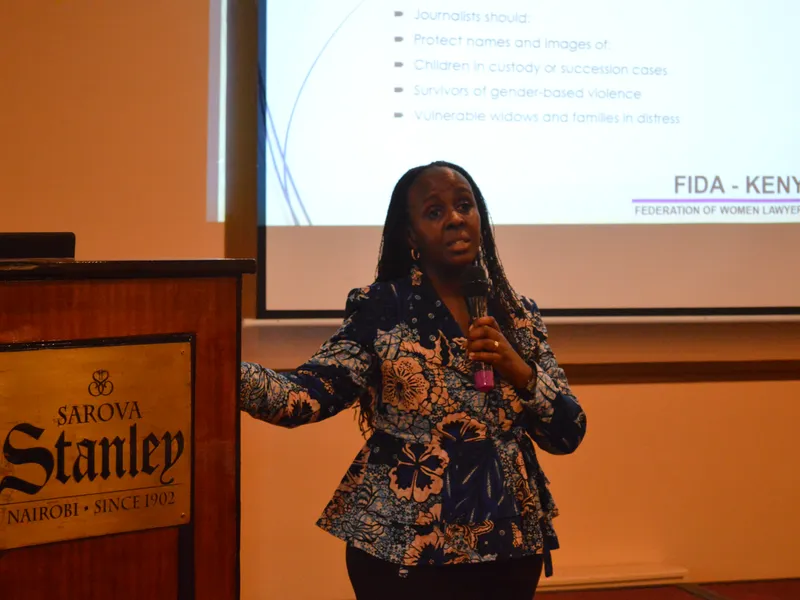
On June 12, African Women and Child Feature Services (AWCFS), with support from UN Women, convened a media learning session on Family and Personal Law. Conducted by FIDA Kenya, the training aimed to strengthen journalists’ understanding and reporting of issues affecting women, children, and families in Kenya.
At a time when family disputes frequently make headlines, the session underscored how critical media reports on family law can either advance justice or undermine it.
Family law stories are some of the most sensitive and consequential beats in journalism. They sit at the intersection of law, culture, gender, and human vulnerability, shaping not only public discourse but also real-life outcomes for individuals and families. As such, strengthening media capacity to report on family law is critical, as media reports on family law can either advance justice or undermine it.
Why Family Law Matters in Journalism
Family law is not just about private disputes—it is a public interest issue. The way journalists report on matters such as marriage, divorce, custody, inheritance, and gender-based violence directly shapes how society understands rights and justice.
Responsible reporting:
- Shapes public understanding of legal rights and obligations
- Promotes access to justice by demystifying legal processes
- Influences societal attitudes toward women, children, and vulnerable groups
- Holds institutions accountable in the administration of justice
Conversely, poor reporting risks misinforming the public, interfering with judicial processes.
and deepening harm for already vulnerable individuals.
Kenya’s Legal Framework: What Journalists Should Know
Understanding these frameworks enables journalists to contextualize cases, interpret court decisions correctly, and avoid misleading narratives. Key statutes include:
- Constitution of Kenya 2010 – Guarantees equality, dignity, and protection of the family
- Marriage Act 2014 – Recognises civil, customary, and religious marriages
- Matrimonial Property Act 2013 – Governs property rights within marriage
- Children Act 2022 – Safeguards children’s rights and welfare
- Law of Succession Act – Regulates inheritance and estate management
Ethical Reporting: Non-Negotiable Standards
1. Protect Identities
Journalists should avoid direct and indirect identifiers. Protecting identity is both a legal obligation and an ethical duty. They must safeguard:
- Children in custody or succession cases
- Survivors of gender-based violence
- Vulnerable families and widows
2. Verify Facts
Accuracy is essential as misreporting could mislead and distort justice.
- Journalists should:
- Use court records and official sources
- Distinguish between allegations, findings, and judgments
- Avoid hearsay and one-sided narratives
- Apply correct legal terminology
3. Avoid Sensationalism
Family law reporting is particularly vulnerable to sensationalism. Headlines like “family war over land” or “battle for millions” may attract attention but undermine public understanding. Instead, reporting should remain factual, measured, and legally grounded. Sensationalism erodes trust and trivializes serious legal issues
Journalists should avoid:
- Turning disputes into entertainment
- Over-dramatizing conflict or suffering
- Framing women or children as antagonists
4. Use Survivor-Centred Reporting
A survivor-centred approach places dignity and safety first as rights holders. This includes:
- Respecting consent and minimizing harm
- Avoiding blame or stigmatizing language
- Centering stories on rights, justice, recovery, and accountability
The Cost of Getting It Wrong
Accuracy and empathy are foundational principles in reporting. Sensational and unethical reporting carries real consequences that include:
- Distorted public perception of justice
- Reinforcement of harmful gender stereotypes
- Increased stigma and fear among victims
- Erosion of trust in both media and legal systems
Conclusion
Having established ethical standards, attention must now turn to commonly misunderstood areas and myths within the Family Law, and shed more light on issues that continue to generate both legal disputes and media misrepresentation.
Strengthening media capacity in family law reporting is ultimately about safeguarding justice. When journalists combine legal literacy with ethical rigor, they help build a more informed, fair, and accountable society through their stories.
Speakers At The Session
Share this story
Are you a woman working in media?
Join IAWRT Kenya for training, mentorship, fellowships and a supportive network of women media practitioners.
More stories
- All Posts
- Articles
- Mentorship
- Networking

Home › Blog › Articles Protecting Journalists in Kenya’s Digital Space: Why Media and Tech Policy Must Be Rights-Based 18 October 2026...
Home › Blog › Articles Reporting Violations Against Female Journalists: A Shared Responsibility 31 August 2026 4 min read Articles By IAWRT...
Home › Blog › Articles What a Year of Tracking and Mapping Online Gender-Based Violence Against Women in Media Revealed 24 August...