
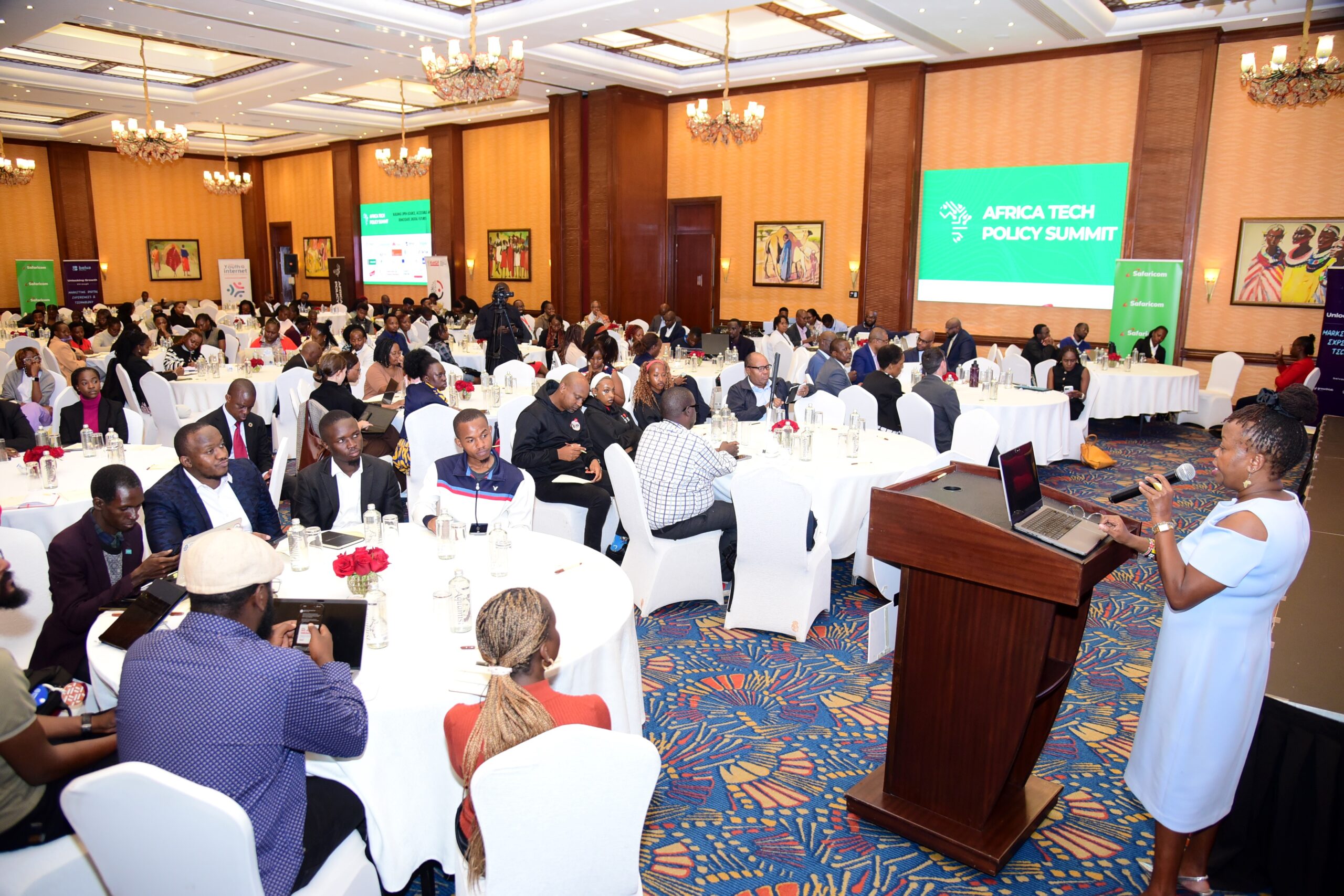
On May 21st, KICTANet hosted the 19th Kenya Internet Governance Forum (KeIGF), the main flagship event of the Africa Tech Policy Summit (AfTPS), convening the government, civil society, academia, the private sector and other stakeholders, in the spirit of multistakeholderism, for Kenya’s premier digital policy forum.
Kenya is hosting the 21st Global Internet Governance Forum in December 2026, making it the first African country to do so twice. That changes the character of every national IGF that precedes it, as the positions Kenya takes in its own forums become the positions it carries to the world stage.
KICTANet CEO Grace Githaiga underscored this moment. Kenya’s 23 million internet users and near-universal 4G coverage are significant milestones, but they mask deeper structural gaps. Africa supplies critical raw materials powering the global AI ecosystem, yet it remains marginal in value capture and infrastructure ownership. The central question remains: who governs Kenya’s digital future, and in whose interest?
Liz Orembo, Chair of the KeIGF Multistakeholder Advisory Group, gave the forum its operating instruction that each session should produce at least one concrete idea actionable before December. Not another report. Not a recommendation to form a committee. Something real.
“If we move from admiring and discussing problems to finding solutions, Kenya IGF will have done its job.” – Liz Orembo
Youth as Agenda Setters
IAWRT Kenya was a partner organisation of the Kenya Youth IGF, a flagship event of the Africa Tech Policy Summit. Under the theme “Digital Future, Youth Voice: Shaping Kenya’s Internet Governance Agenda,” the Youth IGF, addressed AI governance, data sovereignty, cybersecurity, digital rights, Web3, access, affordability, and regional perspectives. These are not abstract issues. Young people are already navigating AI-driven disruption in content creation/production, online harassment, and precarious platform-based livelihoods. The forum concluded with a Youth Position Paper submitted to the national IGF delegation and forms a direct input into the global IGF process, alongside contributions from over 165 countries.
IAWRT Kenya’s involvement reflects our core belief that young women in media and technology must shape the policies that will define their futures.
Key Themes at the AfTPS
- AI governance. Every room touched it. Who writes the rules? Whose data trains the systems? Who is accountable when it goes wrong? For women journalists, the specific threat is AI-generated deepfakes and synthetic media, tools already being used to discredit and harass. These concerns need to be at the centre of Kenya’s December contribution
- Data sovereignty. Kenya has built the infrastructure. The harder question is whether it serves Kenya. Discussions pointed to a pattern across Africa: infrastructure investment without corresponding control over data flows or value chains. Getting this right shapes the regulatory environment for every media organisation and digital platform operating here.
- Access and affordability. 4G coverage on a map is not the same as women in rural Siaya or Marsabit having meaningful internet access. Cost, devices, literacy, and the specific barriers facing women in media outside urban centres persist. These form some of the gaps our programmes are designed to close.
- Online safety and democratic freedoms. For women in media, online violence is not an abstract policy concern. It is a reason journalists self-censor, leave the profession, or don’t enter it at all. The IGF is one of the few spaces where this gets named as a structural governance issue, not a personal problem.
Our Work
At IAWRT Kenya, engagement in these forums is directly tied to action. Our work includes:
- Training women journalists in AI literacy, verification, and fact-checking
- Delivering digital safety and security training
- Building media literacy among rural women
- Mentoring female journalism students
- Researching gender, media, and digital rights
Our participation in these conversations strengthens this pipeline by ensuring women in media are not only reporting on policy but also actively shaping it.
What Comes Next
With the global IGF six months away, the focus must shift to delivery. The value of this year’s KeIGF will ultimately be measured by the implementation of the commitments made.
For IAWRT Kenya, the plan is unchanged: train more women on AI and digital tools, show up in spaces where internet rules are being written, and push for an internet governance framework that treats online gender-based violence as the digital rights issue it is and support digital inclusion through community networks and research.
As Kenya prepares to host the world, exclusion from digital governance is not accidental. It is a policy outcome. And its consequences are real, shaping whose voices are heard, whose safety is protected, and whose futures are built into the digital systems we create. The work ahead is not just to participate in global conversations, but to ensure they reflect the realities and rights of all.
Moments At The Conference
Share this story
Are you a woman working in media?
Join IAWRT Kenya for training, mentorship, fellowships and a supportive network of women media practitioners.
More stories
- All Posts
- Articles
- Mentorship
- Networking

Home › Blog › Articles Protecting Journalists in Kenya’s Digital Space: Why Media and Tech Policy Must Be Rights-Based 18 October 2026...
Home › Blog › Articles Reporting Violations Against Female Journalists: A Shared Responsibility 31 August 2026 4 min read Articles By IAWRT...
Home › Blog › Articles What a Year of Tracking and Mapping Online Gender-Based Violence Against Women in Media Revealed 24 August...